

The Real Problem Most Traders Ignore
Most traders think they have a strategy problem.
They search for new indicators.
They buy courses.
They jump from one system to another.
But in reality, most traders don’t have a strategy problem.
They have a data problem.
Without tracking trades and reviewing performance, improvement becomes guesswork.
You might feel like your strategy works.
You might think you follow your plan.
You might believe your risk management is solid.
But unless you record and review your trades, you simply don’t know.
Trading without data is like running a business without financial reports.
The Illusion of Progress
Many traders believe they are improving simply because they spend hours watching charts.
But chart time alone rarely creates improvement.
What actually produces insight is reviewing your own performance.
Questions every trader should be able to answer:
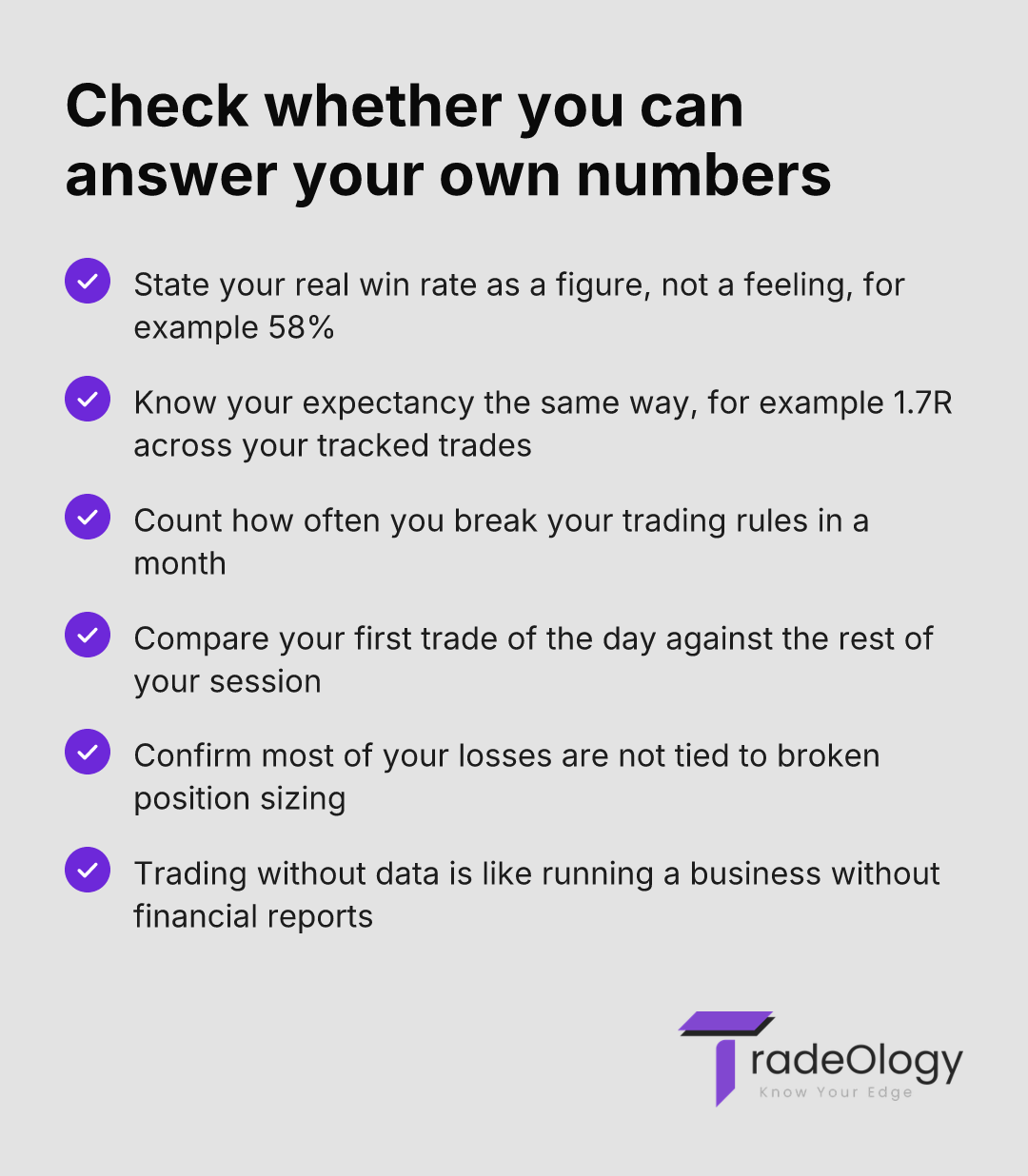
What is my real win rate?
Which setups produce the highest expectancy?
Do I perform better during specific sessions?
How often do I break my trading rules?
These answers don’t come from memory.
They come from structured trade data.
The Hidden Patterns Traders Miss
Most traders repeat the same mistakes for months without realizing it.
Once trades are tracked properly, patterns become obvious.
For example, many traders discover things like:
Their first trade of the day performs best
Revenge trades cause the biggest losses
Certain setups have much higher expectancy
Most losses happen when position sizing rules are broken
Without journaling trades, these patterns remain invisible.
With proper tracking, they become impossible to ignore.
Data Creates Accountability
A trading journal forces traders to confront reality.
Instead of saying:
“I think my strategy works.”
You can say:
“My strategy has a 58% win rate and a 1.7R expectancy.”
That’s the difference between guessing and operating with real data.
Once traders start analyzing their performance objectively, something interesting happens:
They stop blaming the market.
They start improving their execution.
Why Journaling Changes Everything
A proper trading journal answers the questions that actually matter:
Are you following your strategy?
Which setups perform best?
What mistakes are costing you money?
Are you improving over time?
Without this feedback loop, most traders stay stuck repeating the same mistakes.
The traders who improve the fastest treat trading like a system — not a guessing game.
Start Tracking Your Trades
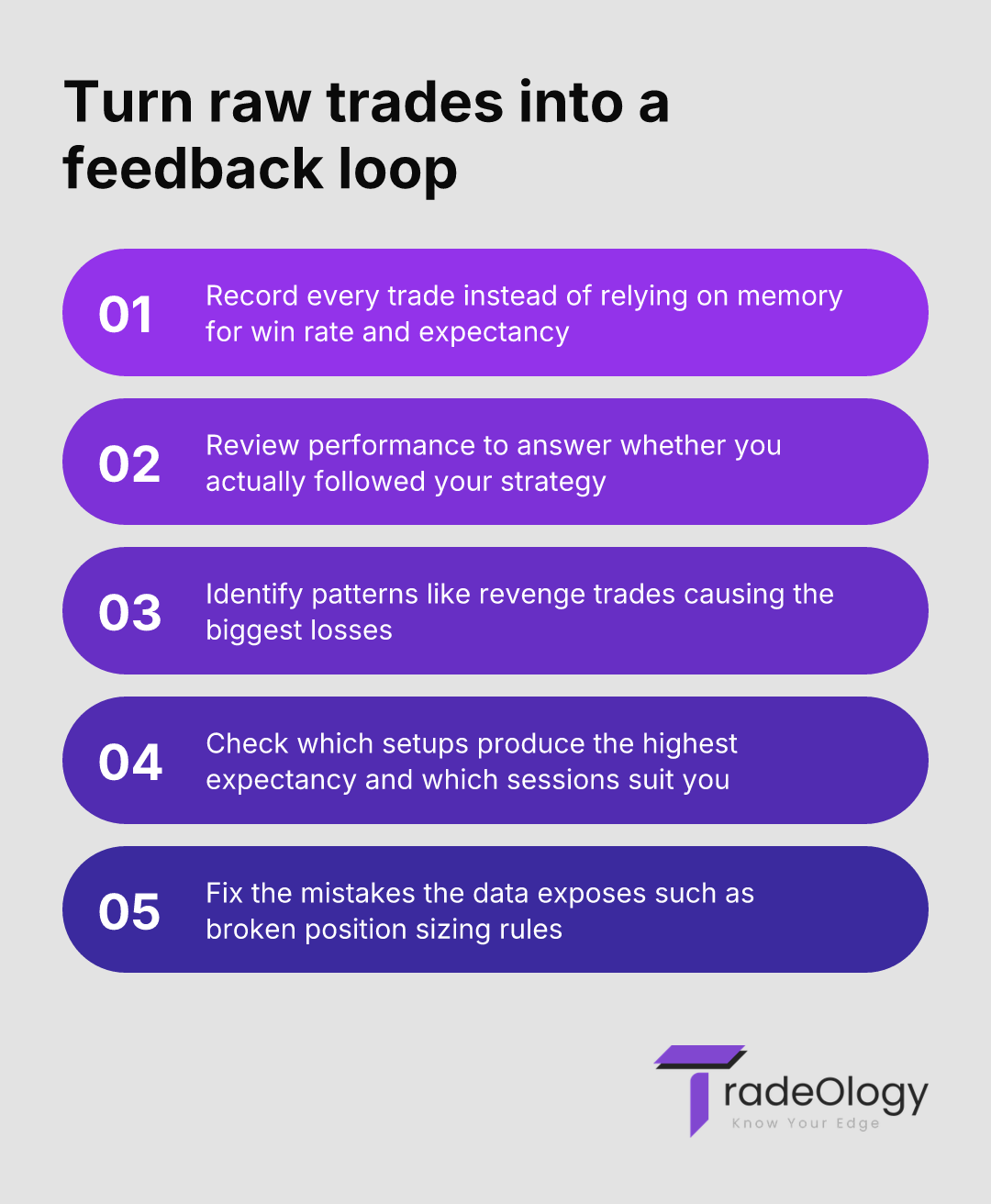
The fastest way to improve as a trader is simple:
Track your trades.
Review your performance.
Identify patterns.
Fix mistakes.
TradeOlogy was built to make that process effortless.
Instead of guessing what works, you can see the data behind your trading decisions — win rate, expectancy, execution quality, and performance over time.
If you're serious about improving your trading, start by understanding your own numbers.
Start journaling your trades with TradeOlogy.